
By Nomathamsaqa Kula
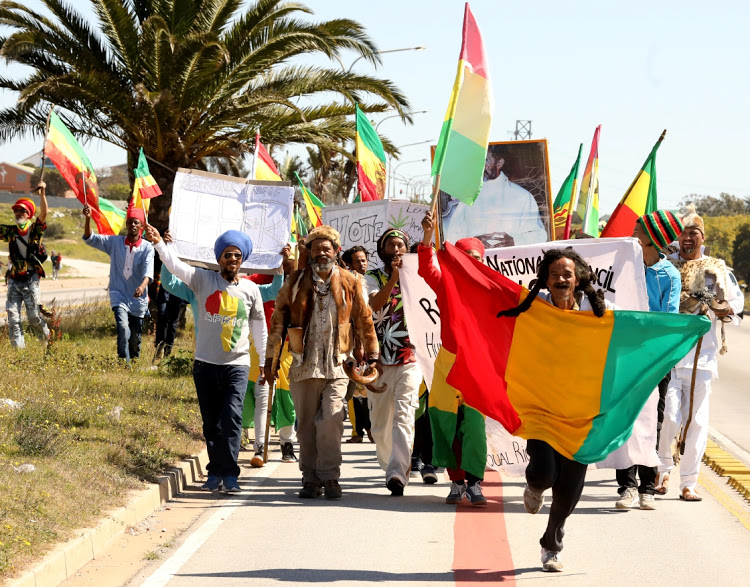
Stanford Road was lit up in the red, yellow and green colours of the Rastafarian community, who marched through the streets of the northern areas to demand they are not passed by in the harvesting of dagga.
Khoisan chiefs and Rastafarian leaders led a group at least 50 people to the magistrate’s court and the Gelvandale Stadium to meet a representative of the department of rural development and agrarian reform to hand over two memorandums.
Khoisan Chief Gaokxaob Kai Anib said years ago dagga was used by indigenous people to relax around a fire and to heal people.
He said now that the plant had been decriminalised, indigenous people needed to educate themselves on how to generate an income from it and be given land to do so.
The farmers already have the power, the infrastructure to start planting dagga as a crop is there, we as a people who suffered the most for the legislation of the plant and arrested, won’t benefit.
“We don’t have land nor resources, we’ve been planting the plant in our backyards, the people with thousands of hectors will benefit, those are white farmers, we want land to cultivate the plant,” he said.
He said cannabidiol (CBD) in the plant had proven healing properties, which the Rastafarian community had embraced long before it was decriminalised.
During winter there are fruits like oranges that nature provides for us the vitamin C that our body needs.
“To the department of justice we want [those that were arrested to have] their criminal records to be cleared so they can apply for jobs.
 Daily Kasi News